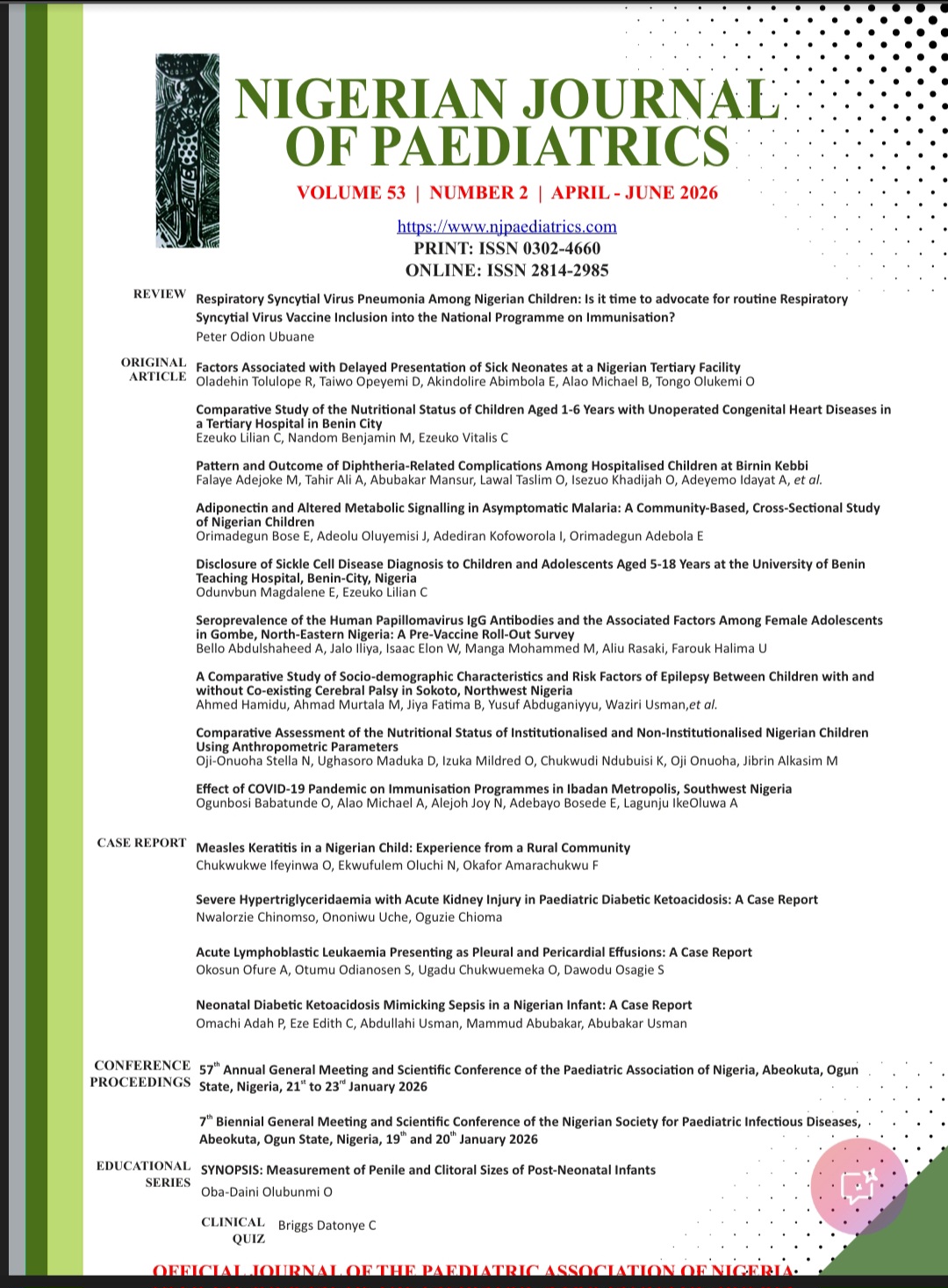
Effect of COVID-19 Pandemic on Immunisation Programmes in Ibadan Metropolis, Southwest Nigeria
DOI:
https://doi.org/10.63270/Abstract
Background: The Severe Acute Respiratory Syndrome Coronavirus-2 (SARS-CoV-2) pandemic disrupted routine immunisation (RI) services. Reports from low- and middle-income countries remain inconsistent and under-represented.
Objective: To evaluate the impact of the COVID-19 pandemic on RI, assess the perspectives of caregivers on service provision and pandemic preparedness in a Nigerian city.
Methods: This cross-sectional study was conducted between December 2020 and February 2021 among consecutive mother-child pairs attending four high-volume immunisation clinics: a public primary, a secondary, a tertiary, and a private healthcare facility. Vaccine uptake and caregivers’ experiences were determined, while multivariable logistic regression models were used to predict missed immunisations.
Results: A total of 416 mother-child pairs were enrolled. Males were 223 (53.6%), while children aged 7-12 months were 59.6% (248/416). Uptake of Expanded Programme on Immunisation vaccines were as follows: Bacillus Calmette-Guérin (BCG) - 98.8%, DPT3 - 95.9%, first dose of measles-containing vaccine - 93.4%, and meningococcal vaccine - 72.8%. RI appointments were missed by 9.6% of caregivers, and 43.0% reported RI clinic closure. Communication gaps observed were as follows: 67.3% of caregivers lacked service providers' contact details, and 87.7% did not have guidance on RI services. Accessing care at a private hospital was an independent predictor of missed RI schedule (AOR 6.2, 95% CI 2.2, 16.1, p < 0.05).
Conclusion: Routine immunisation coverage remained high despite service disruptions and communication gaps. Future pandemic preparedness should prioritise emergency protocols, with particular attention to private healthcare facilities.
Downloads
Published
Data Availability Statement
The data for this study will be made availale upon request to the corresponding author.
Issue
Section
License
Copyright (c) 2026 NIGERIAN JOURNAL OF PAEDIATRICS

This work is licensed under a Creative Commons Attribution 4.0 International License.
This is an open-access journal, and articles are distributed under the terms of the Creative Commons Attribution 4.0 License, which allows others to remix, transform, and build upon the work even, commercially, as long as appropriate credit is given to the author, and the new creations are licensed under identical terms