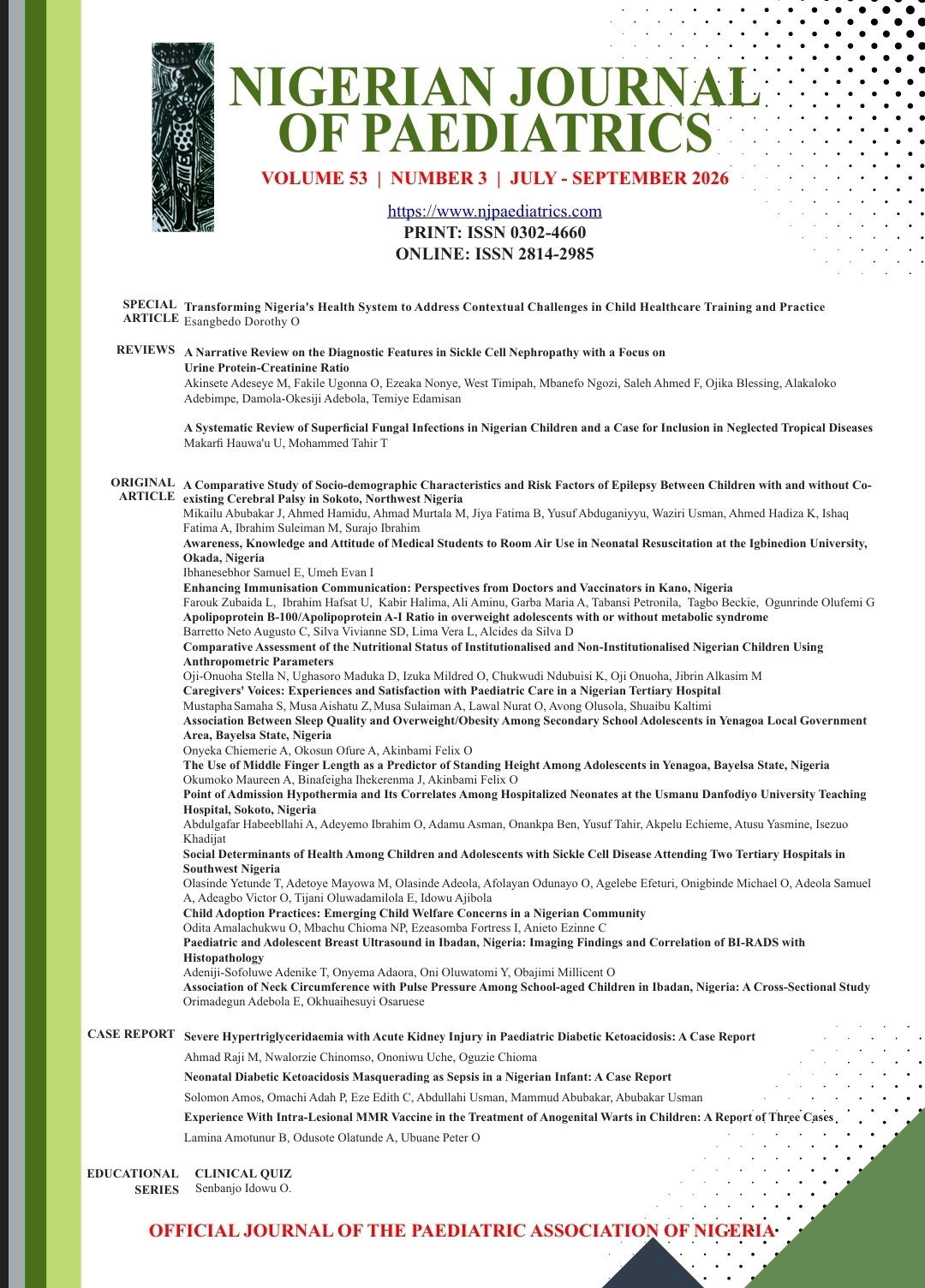
Point of Admission Hypothermia and Its Correlates Among Hospitalized Neonates at the Usmanu Danfodiyo University Teaching Hospital, Sokoto, Nigeria
DOI:
https://doi.org/10.63270/njp.v53i3.2000081Keywords:
Admission, hypothermia, neonates, SCBU, Sokoto.Abstract
Background: Neonatal hypothermia is a preventable cause of mortality, but its burden is poorly researched.
Objective: To determine the prevalence of point of admission hypothermia, causes and outcome among hospitalized neonates.
Methods: This is a retrospective study conducted among neonates aged 0–28 days admitted into the Usmanu Danfodiyo University Teaching Hospital, Sokoto, from 1st January to 30th June 2025. Data was extracted from the case folders using a structured proforma; the data included socio-demographic information, gestational age and anthropometrics. Admission axillary temperature was measured using a low-reading axillary mercury thermometer and was classified according to WHO thresholds.
Results: Of the 258 neonates admitted within the study period, 230 (89.1%) had records of temperature measurement. They comprised 149 (64.8%) males and 81 (35.2%) females. The mean admission temperature was 37.0±1.2°C (range: 33.0-42.0°C). Point of admission hypothermia was recorded in 68 (29.6%) neonates, of which 44 (64.7%) were mild, 24 (35.3%) were moderate but none was severe. Common diagnoses associated with hypothermia included birth asphyxia (34; 43.0%), prematurity (19; 50%) and neonatal sepsis (6; 9.5%). Hypothermia was significantly associated with low birth weight (p = 0.03), diagnosis at admission (p = 0.001) and poor outcome (p = 0.002). There were 5 (2.2%) mortalities, and all of them had hypothermia.
Conclusion: Point-of-admission hypothermia occurred in about a third of neonates admitted. Asphyxia and prematurity were the leading conditions associated with hypothermia. Hypothermia was also associated with increased risk of mortality.
Downloads
Published
Issue
Section
License
Copyright (c) 2026 NIGERIAN JOURNAL OF PAEDIATRICS

This work is licensed under a Creative Commons Attribution 4.0 International License.
This is an open-access journal, and articles are distributed under the terms of the Creative Commons Attribution 4.0 License, which allows others to remix, transform, and build upon the work even, commercially, as long as appropriate credit is given to the author, and the new creations are licensed under identical terms